


Connections

Customer

Real workflows
Inquiry

Proactive
Quote



Observe the workflow
Map the business context
Assign useful AI work
Improve from real outcomes
Leads and deadlines, not left to memory.










No
More than reading files.Know the company behind the work.
Which product is involved? Where does the customer stand? Which price is approved? Who owns the next step? Connecting that business context gives AI a better basis for action. Knowledge, relationships, ongoing tasks and retained experience support real work together.
Enterprise knowledge
The company’s reference room: catalogs, specifications, pricing policies, certifications, common questions, contract templates, procedures and project history in one searchable library. Answers cite their sources, with version, access and update date recorded; conflicting or outdated material is flagged for a person to check.
A relationship map
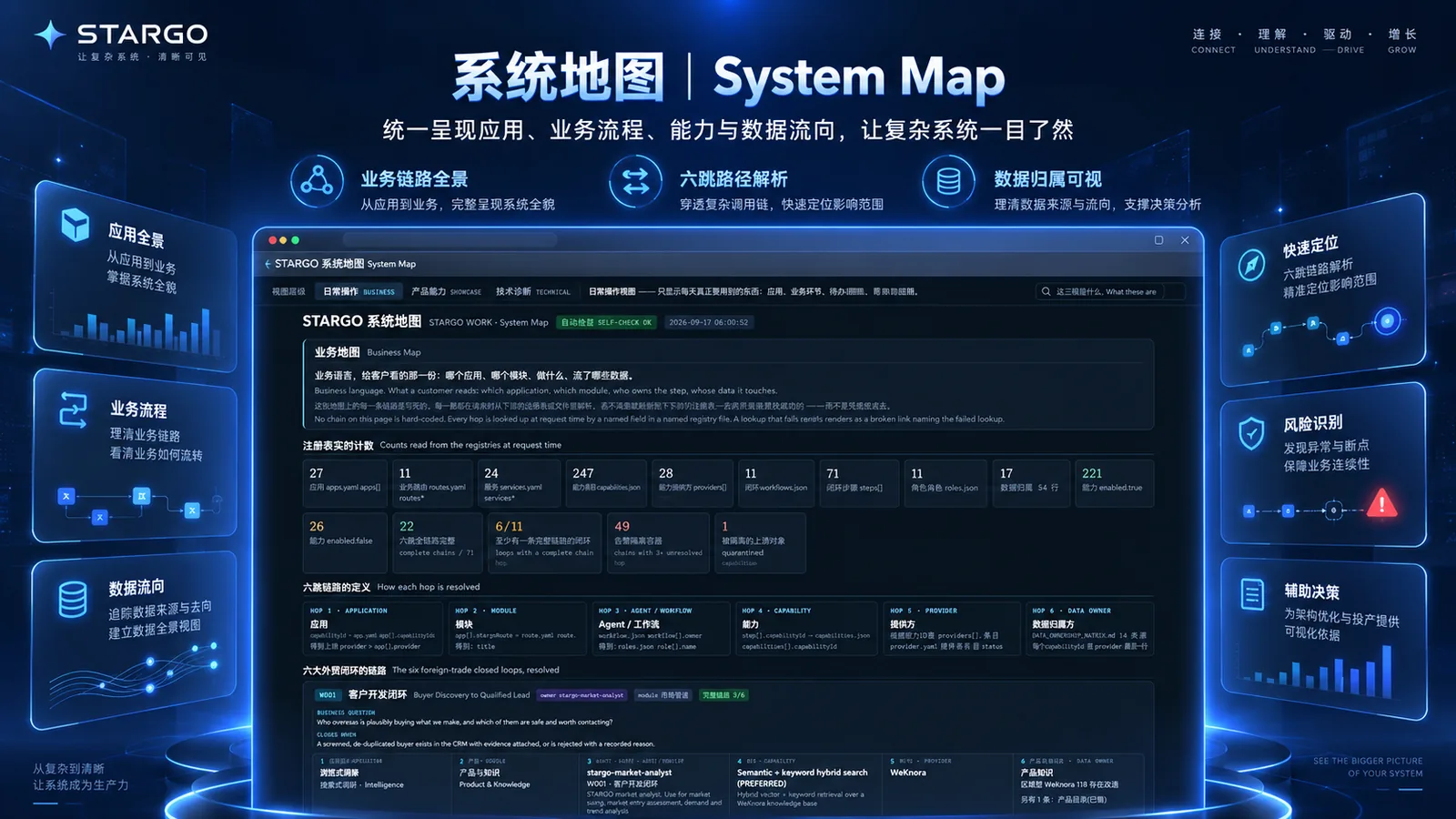
The library holds what the company knows. The relationship map shows how customers, contacts, products, inquiries, opportunities, quotes, orders, documents, tasks and owners connect: where things stand and who moves next. Pricing authority, order conditions and approval rules are part of the map, so AI knows not only the next action but whether it is allowed and who approves it.
One customer, every system
Records in email, CRM, ERP and other systems are checked for whether they describe the same customer, product or order, and the matching evidence is kept: fewer duplicates, mixed-up customers and conflicting facts. Newly imported files wait for review instead of becoming approved facts.
Opportunities and deadlines
Across connected customers, orders, tasks and market signals, it watches for new opportunities, unanswered leads, approaching deadlines, exceptions and pending approvals. Goals such as entering a market or advancing an account become steps with evidence-backed next actions, carried out within authorization. When evidence, permission or consistency is missing, it stops and asks a person.
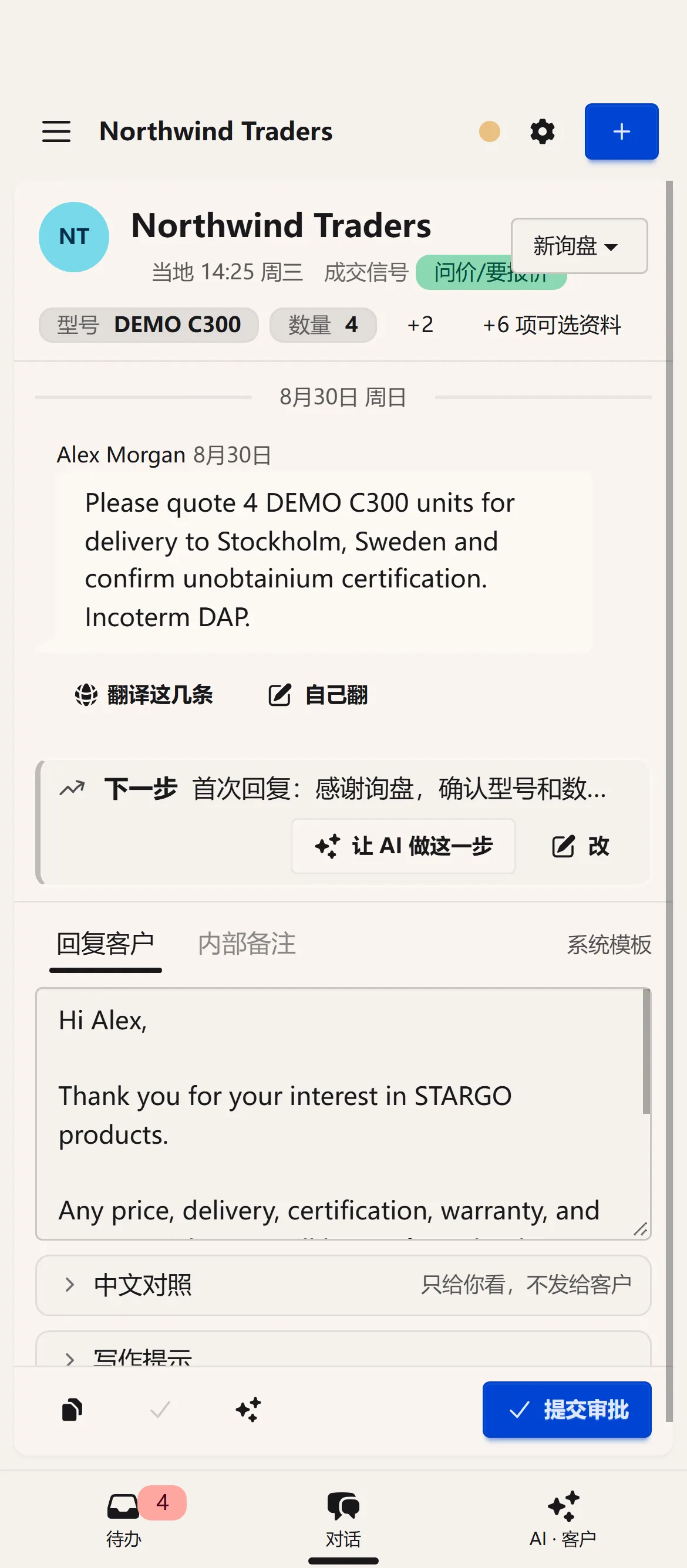
Notice a change → Understand the context → Propose an action → Get approval → Act → Check the result → Retain the lesson
Tasks that carry on
Each task keeps its goal, plan, owner, claim status, deadline, evidence, failure reasons and next step, with progress checked on events or on a schedule. After a pause, a human takeover or a recovery, whoever picks it up does not start from scratch. Whether it keeps running depends on the tasks and operating conditions the company has configured.
Long-term memory
Customer preferences, conversation summaries, project decisions, completed work and follow-up tasks, task outcomes and working procedures are kept in layers. Each memory shows its source, can be corrected and is visible by permission, rather than keeping an unverified guess as fact.
Knowledge, business context, goal progression and controlled improvement have established foundations. Richer relationships and enterprise templates arrive in stages as sources are connected; enterprise-wide proactive work, unified long-term memory and advanced improvement continue to evolve. Proactive work does not imply human consciousness or unrestricted autonomy, and people remain responsible for consequential judgment.
288 AI roles.
Divide the work. Finish it together.
Task teams
Resume the task
without rebuilding
the context.
Keep useful methods.
Withdraw ineffective changes.