
Enterprise knowledge and the business relationship map, explained

Enterprise knowledge answers what your company knows; the business relationship map shows how those things connect and who is responsible right now. Together they let AI work with real business context instead of starting from a blank explanation every time.
Why is reading files not enough?
The CRM has customers, the ERP has orders, the mailbox has inquiries and the shared drive has product files. Each is correct on its own, and none of them knows about the others.
If AI only reads a handful of isolated files, it cannot tell which customer a quote belongs to, which quote an order came from or who should move a task forward — which is why its answers are so often almost right.
What goes into the knowledge base?
The knowledge base is the company’s reference room: company information, catalogs, specifications, pricing policies, certifications, FAQs, sales guidance, contract templates, policies, standard procedures and project history, gathered into one searchable library.
- Sources you can trace: files and authorized sources are brought in with their origin, version, permissions and update date.
- Answers with evidence: answers and actions cite their grounds, and missing material is stated plainly.
- Outdated or conflicting material flagged: when documents are out of date or contradict each other, the conflict is raised for checking instead of one being picked silently.
What does the relationship map connect?
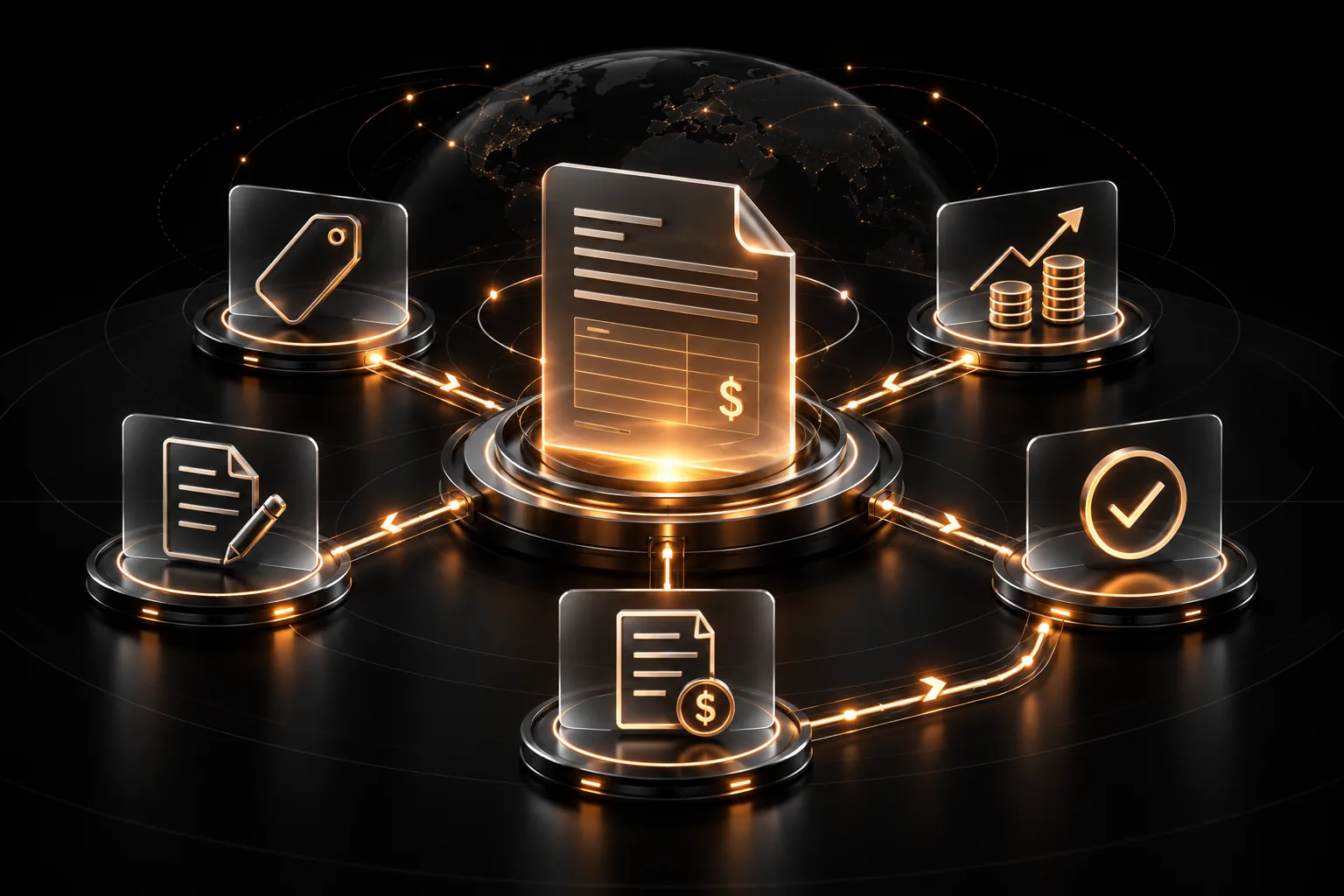
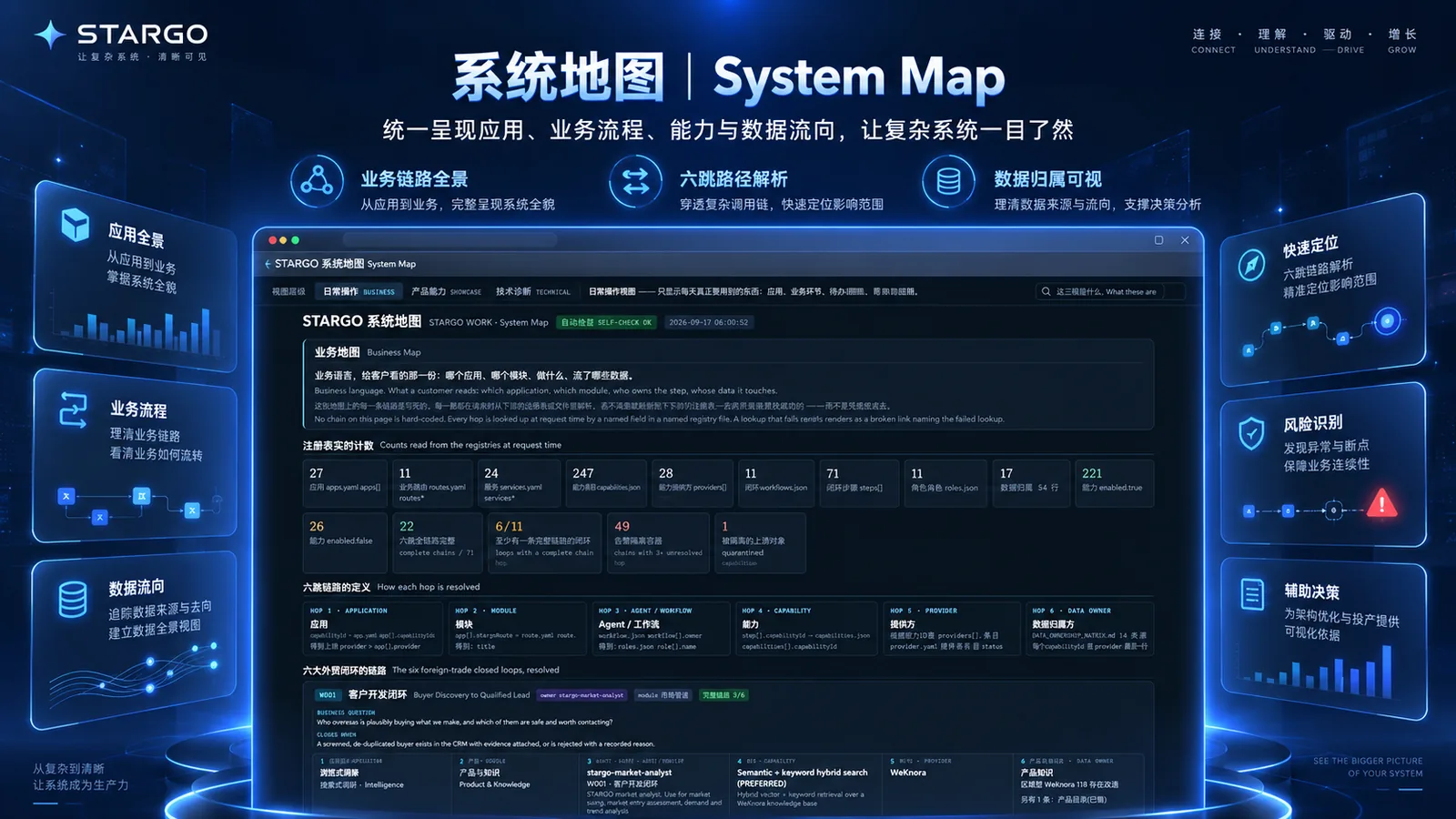
The business relationship map links customers, contacts, products, inquiries, opportunities, quotes, orders, documents, tasks and employees, showing the current status, what has happened and who owns the next step. People and AI employees work from the same picture.
Enterprise knowledge: what the company knows
- Products
- Pricing policy
- Contract templates
- Policies and experience
- Traceable sources
- Visible versions
- Outdated or conflicting material flagged
Relationship map: how things connect, who owns them
- Customer
- Opportunity
- Quote
- Order
- Contact
- Owner
- Product / pricing
- History
- Approval / version
- Tasks / documents
- The same customer?
- Which approved price?
- Who owns the task?
It helps AI answer three everyday questions:
- Is this the same customer? Records in different systems are matched to the same customer, product or order, with the source and matching evidence kept, so duplicates and mixed-up accounts become rarer.
- Which price applies? Pricing authority, price versions, order conditions and approvals are linked, so the approved version is known.
- Who owns this? Owners, approvals, outcomes and past decisions are connected, so AI knows not only what should happen next but whether it is permitted and who is responsible.
How does a new company bring its information in?
Structured templates for products, customers and rules help a new company get started. Imported material is staged for review first and connected to authoritative sources step by step; an upload never becomes approved company fact automatically.
What is available today?
Foundations for enterprise knowledge and business context exist; richer relationships and enterprise templates arrive in stages as sources are connected. Read the business context section of Enterprise Intelligence, and see Products and enterprise knowledge and Business relationships and context in the catalogue.
Want to see how your product and customer information would connect? Request a demo.
Frequently asked questions
How do the knowledge base and the relationship map differ?
The knowledge base is the company’s reference room and answers what the company knows. The relationship map links customers, products, quotes, orders and owners, showing how things connect and who moves the next step.
What does AI do when the answer is not in the files?
It says which information is missing instead of inventing it, and flags outdated or conflicting material for a person to check.
Do uploaded files become approved facts right away?
No. Imported material is staged for review first and connected to authoritative sources step by step.
Must all information be organized before we start?
No. Start with the products, customers, knowledge and rules the first workflow needs, and add more once it works.