
Start with one workflow: five steps to put AI to work
The safest way to bring AI into a company is to pick the one workflow that matters most, run it through five steps and prove it with real cases — then expand to other departments.
Why not change every department at once?
Hand acquisition, customer service, quoting, orders and content to a new system at the same time, and every team spends its energy adapting while no single process runs end to end. It also becomes hard to tell where time was actually saved and where the same work simply moved somewhere else.
One workflow keeps the scope small, the ownership clear and the results easy to check. Once it works, the prepared information, approval rules and working methods carry straight over to the next workflow.
Which workflow should come first?
Usually the one that costs the most time, limits growth the most or has the messiest handoffs. Common starting points for manufacturers and exporters:
- Proactive acquisition: the company relies on marketplace inquiries and has no target account list or outreach priorities of its own.
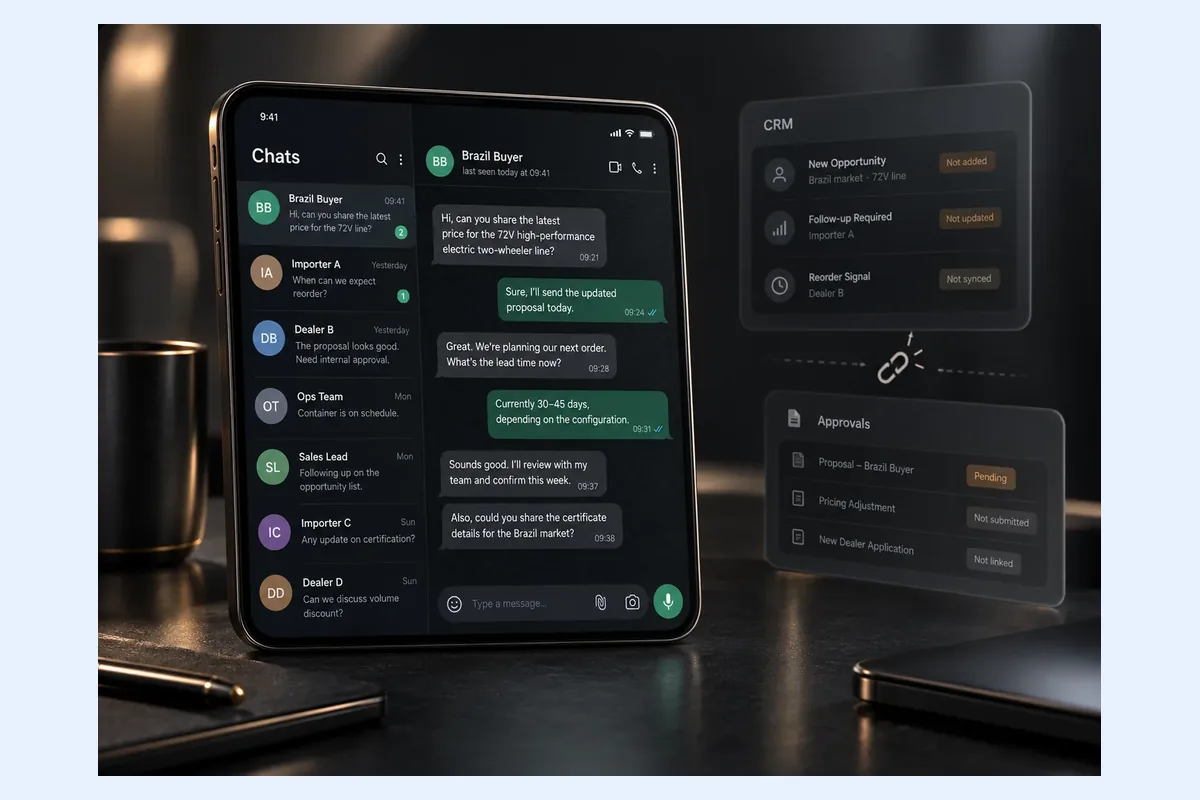
- Inquiries and follow-up: many inquiries, slow replies, and nobody following up once a quote has gone out.
- Quotes and PI: prices live in spreadsheets and verbal approvals; versions and margin limits are unclear.
- Export documents: commercial invoices, packing lists, certificates of origin and Form E materials are checked line by line by hand.
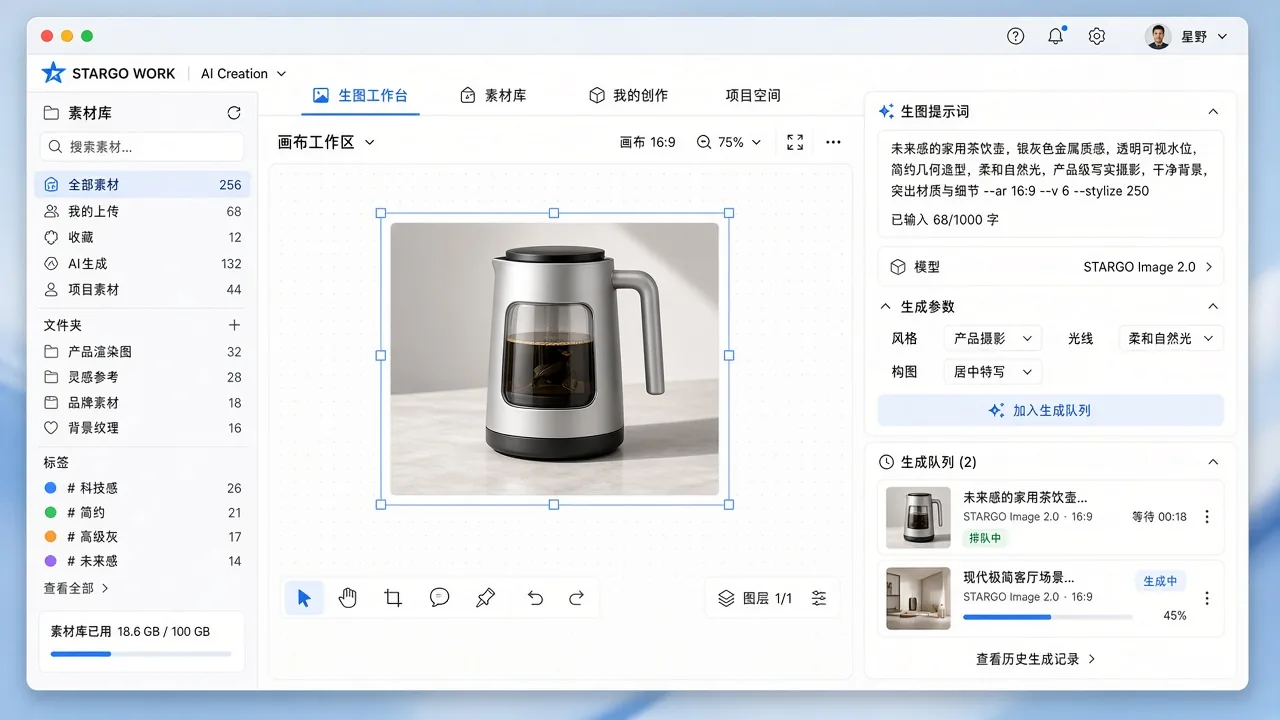
- Marketing assets: product images, detail pages and multilingual copy never keep up with new launches.
What happens in each of the five steps?
- 01Choose a workflowStart with one priority business problem.
- 02Prepare the contextBring in products, customers, knowledge and rules.
- 03Connect your accountsUse authorized business accounts and systems.
- 04Assign roles and approvalsDecide who executes, who approves and who takes over.
- 05Validate the resultTest real cases, then expand the scope.
Delegate the work. Keep the authority.
1. Choose a workflow. Write down the problem, the people involved and what success looks like — for example, faster replies or quotes that can be traced back to approved prices.
2. Prepare the context. Bring in only the products, customers, knowledge and business rules this workflow needs. Uploaded material is reviewed first, before it counts as approved company information.
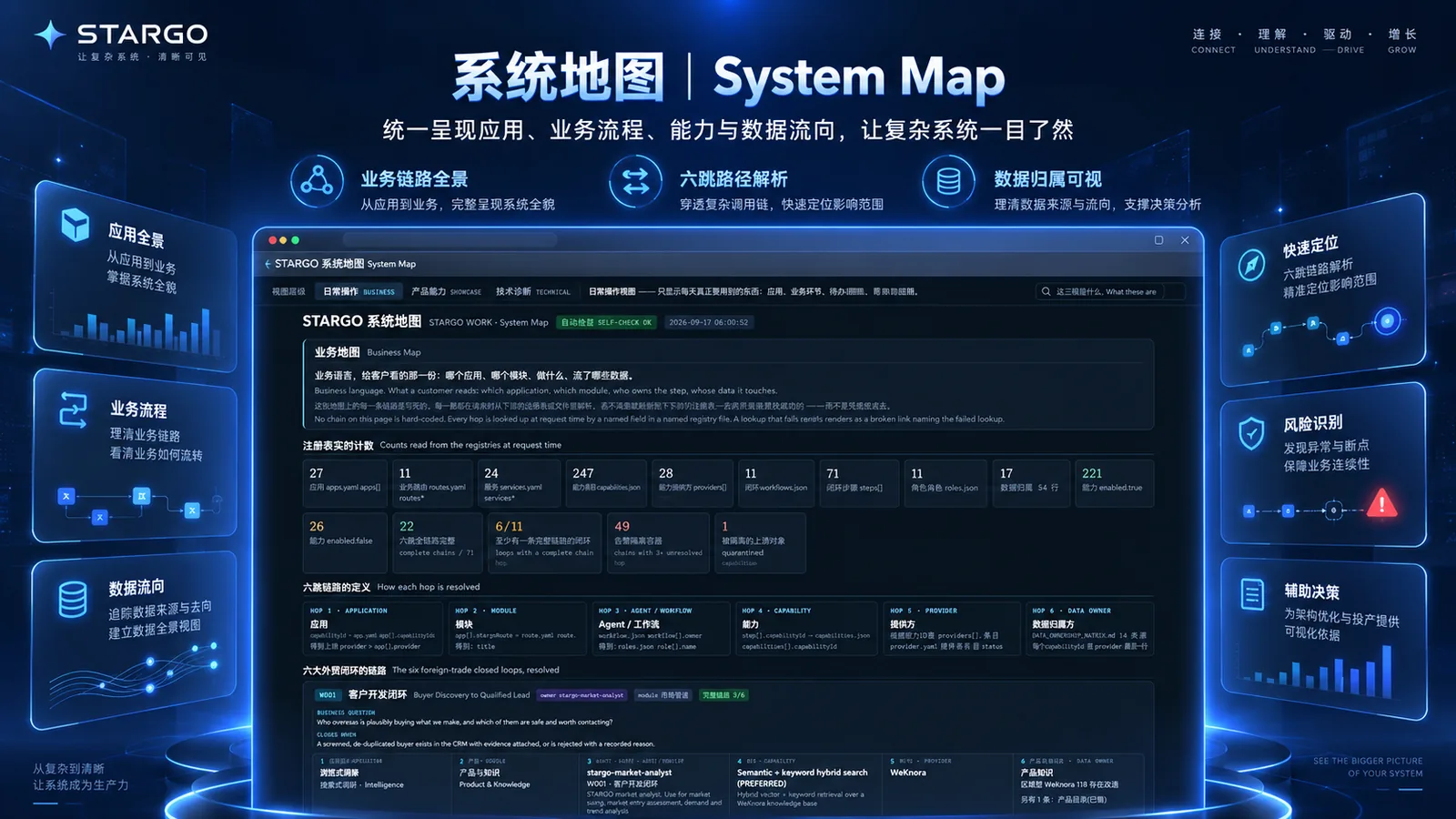
3. Connect your accounts. Connect existing email, drives, CRM and ERP through company authorization. A full replacement should not be assumed; what is kept, connected or adjusted is decided system by system.
4. Assign roles and approvals. Decide which AI employees do the work, who approves, who takes over when something goes wrong, and which budgets and actions are allowed.
5. Validate the result. Check real cases. A page that opens, or an AI message saying “done”, is not the test; the business result is. Expand only once it holds.
What do people do in the workflow?
Approvals belong in the first workflow, not after scale. AI organizes information, drafts and recommends next steps; authorized people decide quotations, outreach, important commitments and payments. Approval, sending and checking the outcome are separate steps, each with a record. That is the STARGO WORK principle: delegate the work, keep the authority.
How do you expand after the first workflow?
Once the first workflow proves useful, more business areas and AI roles open in phases, according to configuration and the agreed delivery scope. Conditions differ by capability: Growth OS connects live data and outreach by authorization; Sales Desk connects and validates channel messaging and business handoffs one by one; ERP, fulfillment and finance coordination are delivered in stages through the systems a company connects.
See Enterprise control and delivery for the implementation steps, the full capability catalogue for every business area, and Pricing for plans.
Which workflow would you fix first? Request a demo and we will break it into five steps with you.
Frequently asked questions
Where should an enterprise start?
Choose one priority workflow. Prepare product, customer, knowledge and policy context, connect authorized accounts, assign roles and approvals, then validate real cases. Expand after that first workflow is proven useful.
Must we replace our current CRM, ERP, email and drives?
A complete replacement should not be assumed. STARGO WORK aims to connect existing accounts and information in one workspace. Which systems are retained, integrated or adjusted depends on the enterprise’s software and access permissions.
What does the first workflow need?
The products, customers, knowledge and business rules that workflow touches, plus the business accounts the company authorizes. It also needs clear roles: which AI employees do the work, who approves and who takes over when something goes wrong.
How does the scope grow after that?
Once real cases confirm the first workflow works, more business areas and AI roles open in phases according to configuration and the agreed delivery scope. Each capability has its own conditions, so each is confirmed separately.