
Who decides? Approvals, records, budgets and human takeover

In STARGO WORK, authorized people make the consequential decisions. AI prepares the information, drafts and recommendations; quotes, outreach and payments follow the company’s approval rules; actions, approvals, costs and results are recorded; and work can be paused or taken over at any time.
Why does control matter more once AI can act?
When AI only answers questions, the worst outcome is a wrong answer. Once it drafts quotes, prepares PIs, replies to customers and organizes trade documents, permissions, approvals, records and budgets stop being extras and become part of the product.
An owner needs more than busy AI: who is doing what, where the money goes, how far each customer has progressed and which decisions are waiting for them.
Which actions need approval?
- Price and discount: a quote beyond a discount permission or margin guardrail goes to the person authorized to confirm it.
- Outreach and publishing: messages to customers and marketing content for external channels are reviewed under company rules.
- Important commitments: contract terms, delivery promises and anything else that binds the company.
- Official filings and payments: confirmed by authorized people. AI does not authorize payments on its own, and a prepared filing is not an accepted one.
- Company-defined actions: any business action the company considers critical can sit behind an approval.
What should an approver see?
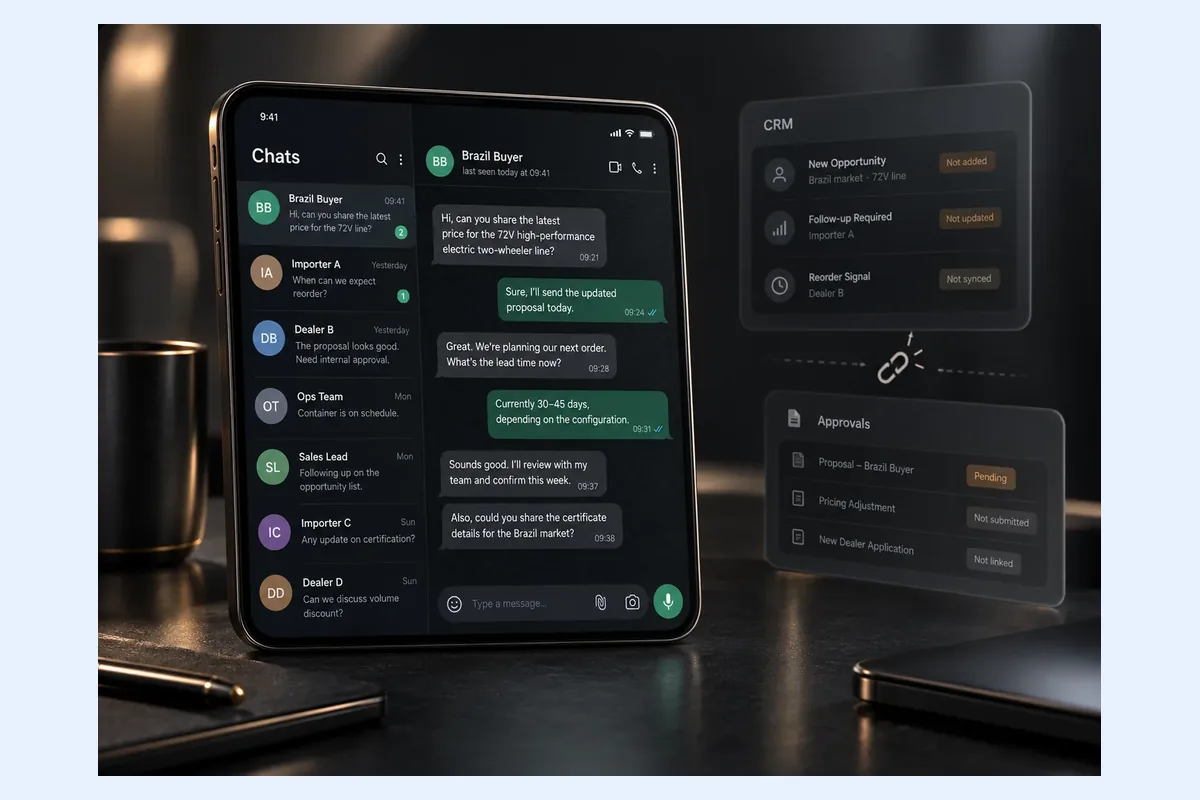
Not an isolated approve button. The approver needs the context: who the customer is, which price list or document the draft relies on, what the draft says, what it will cost and whether it crosses a limit. Approval means something only when the grounds are visible. Afterwards, the outcome and the approval record are kept together and can be reviewed later.
Why keep approved, sent and done apart?
Approved, sent and done are different states. An approved quote has not necessarily reached the customer; a sent message does not mean it was received, or that the order is won.
STARGO WORK records these states separately and distinguishes work in progress, submitted work, results awaiting a check and verified completion — so an AI message saying “done” is never taken as proof.
How are budgets, stops and takeover set?
- Access: data and tool permissions follow each role, data is kept apart between companies, and sign-in credentials are kept securely in one place.
- Budgets: usage and cost have limits, and an AI team’s collaboration rounds and permitted actions are capped.
- Stop on failure: failed work is reported and stopped, or handed to a person. Failures are not hidden.
- Pause and takeover: any task can be paused and taken over by a person, then resumed.
What does the owner’s cockpit show?
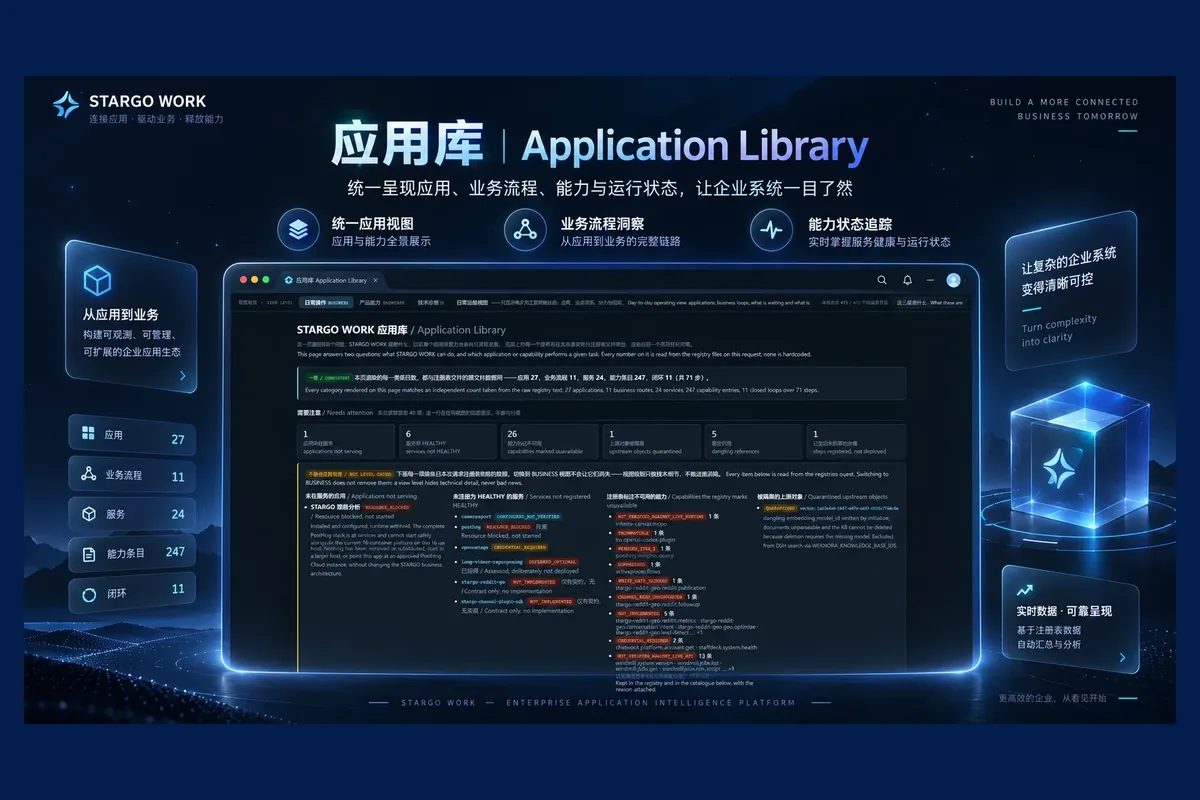
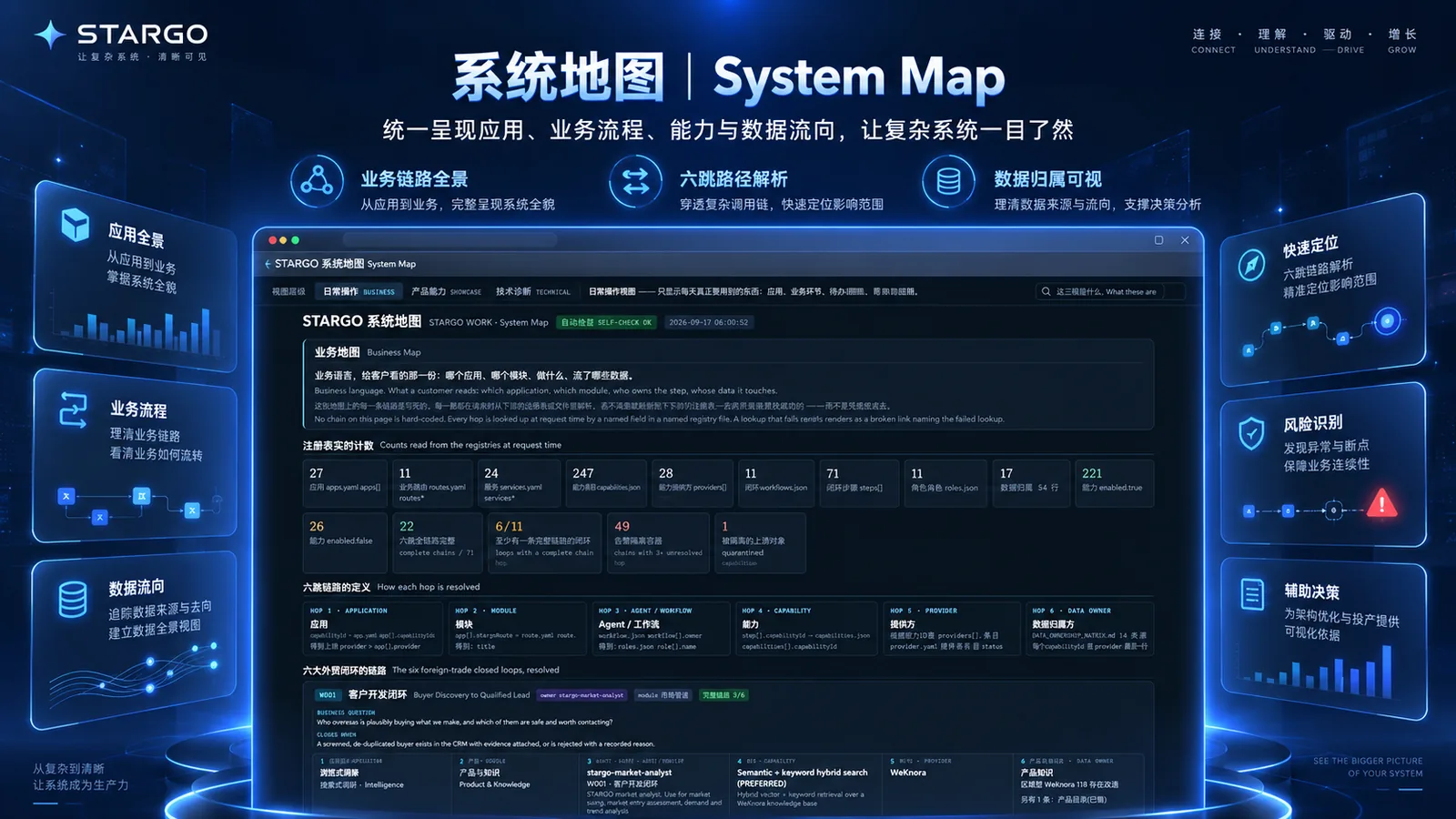
The owner’s cockpit summarizes customers, opportunities, quotes, orders, follow-ups, pending approvals and exceptions. The task overview shows goals, tasks, steps, owners, failure reasons and results. The control center brings data synchronization, applications and system status together. Every metric comes from connected data only; where data is missing, the dashboard says so instead of estimating.
- 01VisibleCustomer progress, task owners and what needs attention.
- 02ControllableQuotes, outreach and payments stay under authorized human control.
- 03TraceableActions, approvals, costs and results are kept — failures included.
Dashboard metrics come only from connected data; missing figures are shown as missing.
What is available today?
Management and control foundations exist; dashboard data, automated actions and advanced analytics are accepted against verified data connections. See Enterprise control and delivery for implementation steps and limits, and Permissions, approvals and control and Workspace and business overview in the catalogue.
Want to decide which actions must come to you? Request a demo.
Frequently asked questions
Who controls consequential actions?
Authorized people do. AI can organize information, prepare drafts and recommend next steps. Quotations, outreach, important commitments, official submissions and payments remain subject to enterprise approval rules. Approval, delivery and outcome checks are distinct steps.
Where do the cockpit’s numbers come from?
Only from business data that has been connected. Missing metrics are shown as missing rather than estimated, and dashboard data and automated actions are accepted against real connections.
What happens when AI work fails?
It is reported and stopped, or handed to a person. The evidence is kept for recovery or review, and the task is never marked as done.
Can AI employees exceed their permissions by sharing task information?
No. Shared task context does not open all company data or transfer another employee’s permissions, and external actions still need an authorized approval.